
Somewhere between the first “Distracted Boyfriend” meme and the forty-seventh remixed version of that cat being dramatically surprised, meme culture stopped being a corner of the internet and became the internet. Memes drive conversations, launch products, end careers, and occasionally explain complex geopolitical situations better than any cable news segment ever could. And the format has evolved — static images with Impact font are still around, but video memes now dominate feeds across TikTok, Instagram Reels, and X.
Here’s the thing most people don’t realize: you don’t need to be a video editor to make meme videos that actually get shared. The tools have caught up to the culture, and what used to require After Effects and a working knowledge of keyframes now takes about as long as ordering coffee. The real skill isn’t technical anymore — it’s knowing what’s funny, what’s timely, and how to hit that sweet spot between relatable and absurd.
Why Video Memes Outperform Everything Else on Social Media
Static memes still work, but the numbers tell a clear story. Video content consistently earns higher engagement rates, longer view times, and more shares than image posts across every major platform. Algorithms favor motion. Human attention favors motion. And meme culture, which thrives on remixing and recontextualizing, has found its natural home in short-form video.
The format is deceptively simple. Take a relatable scenario, add unexpected text or audio, and keep it under fifteen seconds. But execution matters — timing, text placement, pacing, and the choice of source footage all influence whether something gets three views or three million.
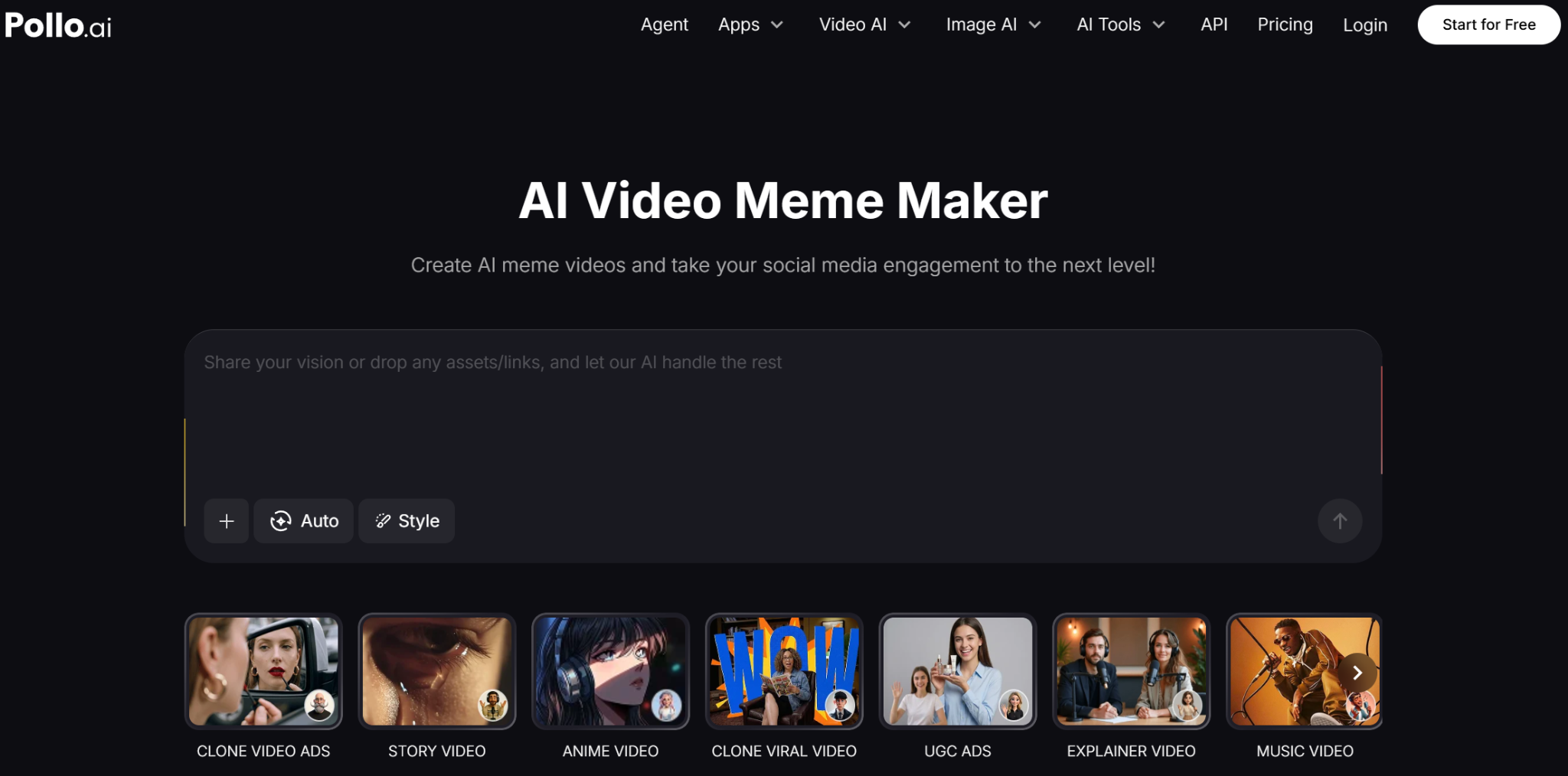
This is where AI tools have genuinely changed the game. Pollo AI offers a dedicated platform for creators to make viral meme videos without touching traditional editing software. The platform provides templates, AI-powered text and effect overlays, and a workflow designed specifically for the meme format — short, punchy, shareable. What makes Pollo AI’s approach work is that it understands the grammar of meme videos. The templates aren’t generic video presets with a meme label slapped on; they’re built around the actual formats that perform well on social platforms, from reaction clips to caption-style storytelling.
The Anatomy of a Meme Video That Actually Goes Viral
Virality isn’t random. It feels random, but patterns emerge when you study what consistently breaks through. Understanding these patterns won’t guarantee your next video hits a million views, but it dramatically improves your odds.
Relatability is the foundation. The most shared meme videos tap into experiences that a huge number of people have but rarely articulate. The “me when…” format works because it gives viewers the thrill of recognition — someone else feels this too. The more specific the observation, paradoxically, the more universal it tends to feel.
Timing is the multiplier. A perfectly crafted meme about a cultural moment that happened last week is already stale. The creators who consistently go viral are the ones who can identify a trending topic, find the comedic angle, and produce the video within hours, not days. Speed of production is a genuine competitive advantage in meme culture, which is another reason AI-powered tools have become essential for serious creators.
Format familiarity with a twist is what separates good memes from great ones. The best viral videos use a format the audience instantly recognizes — the dramatic zoom, the unexpected cut, the perfectly timed caption — but subvert expectations in the final beat. You’re working with the audience’s pattern recognition and then breaking it for comedic effect.
Sound design is chronically underrated. The right audio clip — a dramatic orchestral sting, a perfectly placed record scratch, a trending sound bite — can elevate a decent visual gag into something people watch on repeat. Many of Pollo AI’s video effect templates come with audio elements already matched to the visual format, which saves the step of hunting through sound libraries.
Trending Meme Formats Worth Trying Right Now
Meme formats cycle fast, but a few current trends have shown real staying power and are worth building into your content strategy.

The AI baby dance format has exploded across social platforms and shows no signs of slowing down. Pollo AI’s Baby Dance Video generator lets you turn any photo into a viral baby dancing video clip instantly. The appeal is almost universal — there’s something inherently joyful and shareable about a baby grooving to music, and the AI-generated versions add a layer of absurdity that makes them perfect meme material. Creators on platforms like Facebook and TikTok have been using Pollo AI to produce these clips and racking up impressive engagement numbers. The format works for personal entertainment, but brands have also started using it for lighthearted social content that humanizes their feeds.
The “POV” format continues to perform well, where the viewer is placed in a specific scenario through first-person caption framing. These work particularly well as video memes because the moving footage adds immersion that a static image can’t match.
Side-by-side comparison memes — “expectation vs. reality,” “what I ordered vs. what arrived” — have migrated successfully from image to video format. The motion adds comedic timing that the static version lacks, especially when you can control the pacing of the reveal.
Remix culture memes, where creators take existing footage and recontextualize it with new captions or audio, remain the backbone of video meme culture. The legal landscape around this is worth being aware of, but the creative possibilities are essentially infinite.
Building a Consistent Meme Content Strategy
If you’re creating meme videos as part of a broader content strategy — whether for a personal brand, a business account, or a dedicated meme page — consistency matters more than any single viral hit.
Establish a posting rhythm that you can actually maintain. Three solid meme videos per week will outperform one incredible video per month in terms of audience growth and algorithmic favor. AI tools like Pollo AI make this cadence realistic even for solo creators because the production time per video drops from hours to minutes.
Develop a recognizable style. The most successful meme accounts have a consistent visual or comedic identity — a particular type of humor, a recurring format, a signature editing style. Even within the fast-moving meme landscape, brand consistency helps audiences find and follow you.
Pay attention to your analytics, but don’t let them paralyze you. Not every video will perform equally, and chasing metrics on individual posts leads to creative burnout. Look for patterns over weeks and months: which formats consistently engage your audience, which topics generate the most shares, which posting times work best.
Engage with trends early but don’t force it. If a trending format doesn’t fit your style or you can’t find a genuine angle, skip it. Forced trend participation is visible and unappealing. The best meme creators know when to ride a wave and when to let it pass.
The Creator’s Edge in an AI-Assisted World
The democratization of meme video creation means more content than ever is flooding every platform. That sounds like it would make standing out harder, and in one sense it does — the volume of competition is enormous. But it also means the audience’s appetite for fresh, clever content has never been greater.
AI handles the production. It removes the technical barriers that used to gatekeep video creation. What it doesn’t do — and what gives human creators their lasting advantage — is understand cultural context, emotional nuance, and comedic timing at the level required to make something genuinely resonate.
The creators who will thrive aren’t the ones with the most sophisticated tools. They’re the ones who observe the world closely, identify the absurdities and shared experiences that connect people, and translate those observations into fifteen seconds of video that makes someone laugh hard enough to hit share. The tools just make sure the idea in your head actually makes it to the screen — and platforms like Pollo AI are making that translation faster and more accessible than it has ever been.