
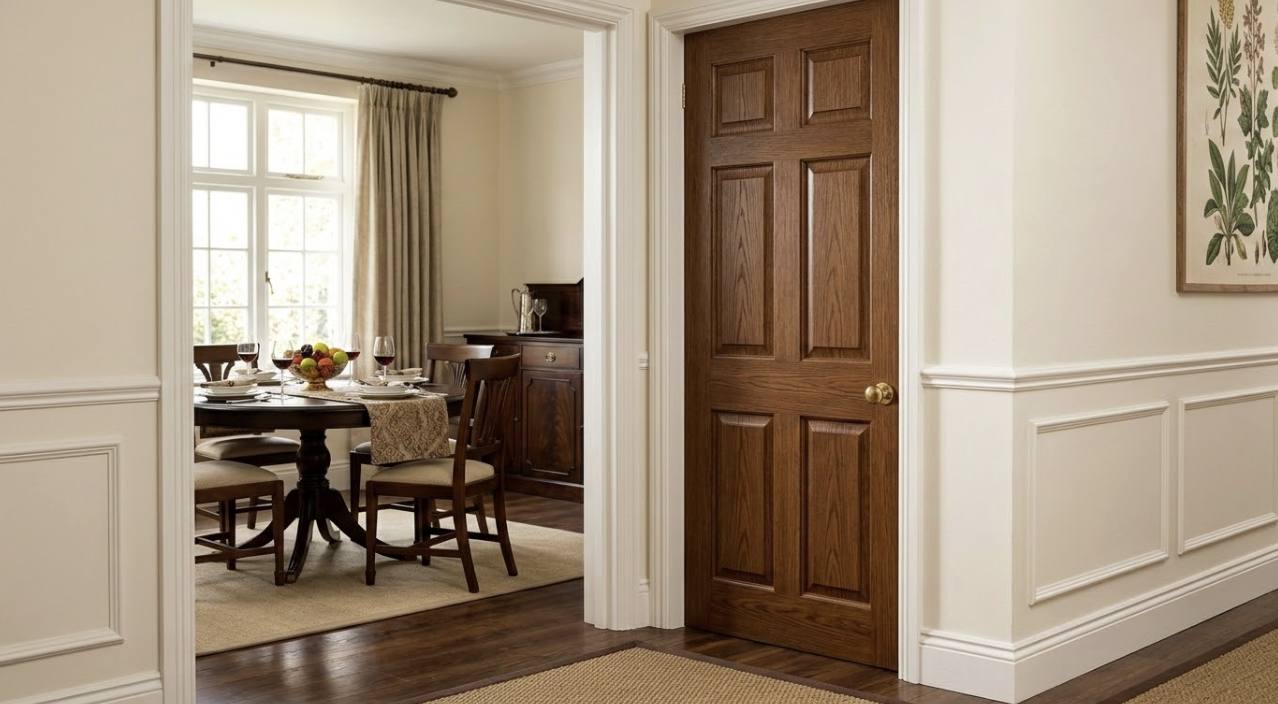
When homeowners think about renovating or refreshing a property, the focus tends to fall on kitchens, bathrooms, and flooring. Yet one of the most impactful changes a home can make is to install high-quality internal oak doors. The difference between hollow-core doors and solid timber alternatives is felt as much as it is seen, in the way a room closes, the way sound is contained, and the overall sense of quality that runs through the property.
Why Internal Doors Define How a Home Feels
The internal doors of a home are used dozens of times every day, and their quality has a direct bearing on how the property feels to live in. A solid door that closes cleanly and quietly communicates craftsmanship and attention to detail. A lightweight, hollow door does the opposite. It rattles, flexes, and cheapens the impression of even a well-decorated room. When a home is fitted with well-made internal doors that open and close with substance and purpose, the overall experience of the space improves considerably. It is a change that is easy to underestimate until it has actually been made.
The Acoustic Benefits of Solid Timber
Sound transmission between rooms is one of the most commonly reported sources of frustration in shared homes. Hollow-core doors do very little to contain sound, meaning that noise from one room travels freely into adjacent spaces. Solid timber doors provide meaningful acoustic insulation that makes a tangible difference to everyday living. Whether the goal is to contain sound from a television in the living room, create a quieter environment for a home office, or give bedrooms a greater sense of privacy, the acoustic performance of solid internal doors is a practical benefit that residents appreciate on a daily basis.
Oak as a Material for Interior Doors
Among the various timbers used for internal doors, oak occupies a particularly respected position. Its natural grain pattern gives each door a visual quality that cannot be replicated with veneers or painted finishes, and the material’s warmth adds character to hallways, bedrooms, and living areas alike. Oak is a stable hardwood, meaning it is less susceptible to movement caused by changes in humidity and temperature than softer alternatives. This stability means that oak doors are less likely to develop binding, sticking, or warping over time, qualities that contribute to a long service life and reduced maintenance requirements.
Consistency Across the Home
One of the most effective ways to create a coherent and polished interior is to use the same door style throughout the property. Mixing door styles, finishes, and materials across different rooms creates a disjointed appearance that can undermine even a carefully designed interior scheme. Committing to a single range of solid oak internal doors, whether panelled, flush, or glazed, ties the interior together in a way that feels intentional and refined. This approach does not require every room to look identical, but it does ensure that the transition from one space to another feels natural and consistent throughout the home.
Choosing Between Panelled, Flush, and Glazed Options
The style of the internal door that works best in a given home depends on the overall design direction and the function of the individual room. Panelled oak doors with traditional mouldings work well in period properties and classic interiors, lending a sense of history and character. Flush doors with a simple, flat face suit contemporary spaces where a clean, uncluttered aesthetic is preferred. Glazed panels are useful in areas where natural light needs to be borrowed from one room to another, such as between a hallway and a kitchen or a dining room and a living space.
Planning the Installation Process
Replacing internal doors is a project that benefits from careful planning before any work begins. Measuring each opening accurately is essential, as door sizes can vary even between rooms in the same property. The condition of the existing door frames and linings should also be assessed. In some cases, these will need to be replaced or adjusted to accommodate the new doors. If the property has non-standard or irregular openings, bespoke sizing may be required. Working through the full scope of the project with a reliable supplier helps to ensure that the right doors are ordered in the right quantities and that the installation proceeds without unnecessary delays.