
You don’t need a full renovation to make your living room feel like something out of a design magazine. Often, the difference between a room that feels flat and one that feels like luxury comes down to a handful of intentional choices: how light moves through the space, what textures you introduce, and how you use small details to your advantage. This article walks through practical, budget-conscious changes you can make this weekend that bring a sense of luxury polish and comfort to your living room.
How to Make Your Living Room Feel Luxurious
Rethink Your Lighting Layers
Overhead lighting alone tends to flatten a room and cast harsh shadows. Hotels and high-end interiors almost always use layered lighting instead, which is basically a mix of ambient, task, and accent sources at different heights.
To achieve this look, start by adding at least two lamps at different levels: a floor lamp in a reading corner and a table lamp near your sofa. Warm-toned bulbs (around 2700K) create a softer, more inviting glow than the cooler white light many overhead fixtures use by default. If you have a dimmer switch or smart bulbs, use them to adjust brightness depending on the time of day or activity. You can go from bright and functional in the morning to soft and relaxed in the evening.
Introduce Texture Through Textiles
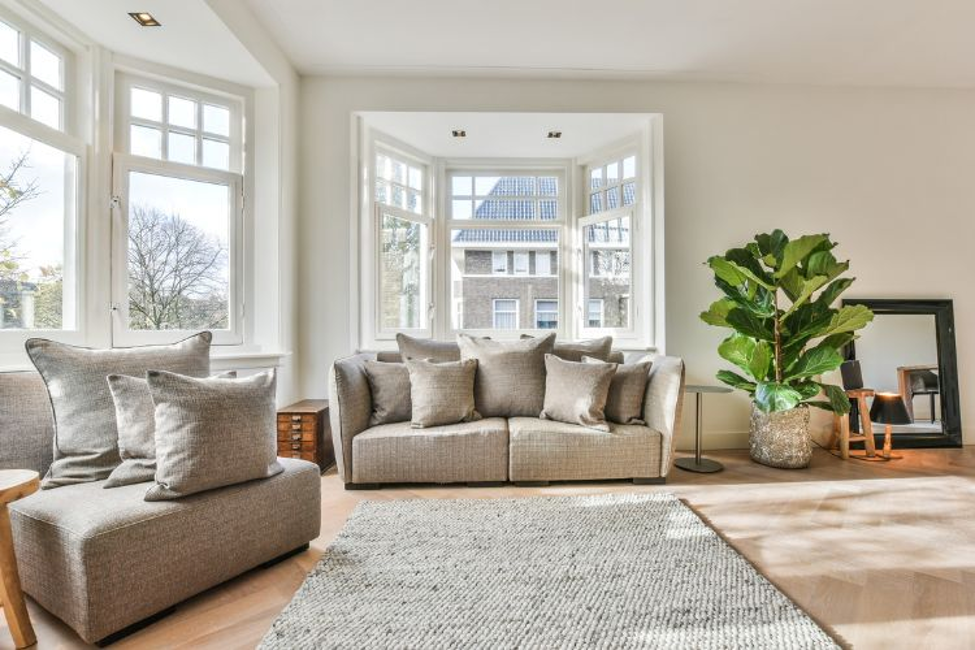
Texture is one of the fastest ways to add depth to a room without touching the walls or furniture layout. A mix of materials, such as a chunky knit throw, a smooth velvet pillow, or a woven jute rug, can make a space feel curated rather than assembled from a single catalog. Aim for at least three different textures within your seating area. If your sofa is a solid, neutral color, this is where you can introduce pattern and richness without overwhelming the room. Rotate throw pillows seasonally to keep the space feeling fresh throughout the year.
Bring in Natural Elements and Greenery
Living rooms that feel expensive almost always include some element of nature, whether that’s a large potted plant in the corner or a small arrangement on the coffee table. Greenery softens hard lines from furniture and architecture, and it introduces color that doesn’t come from paint or fabric.
If you’re working with low light or don’t want the maintenance of live plants, high-quality faux arrangements have come a long way and can look nearly indistinguishable from the real thing. Companies like Jamali Garden have a wide range of stunning silk flowers and plants, as well as other decorative items, that let you match your greenery to the rest of your room’s palette, whether you’re going for a more organic, textured look or something sleek and modern.
Curate Your Coffee Table and Shelving
An overcrowded coffee table or shelf reads as cluttered, no matter how nice the individual pieces are. Instead, group objects in odd numbers (typically three) and vary their height. A stack of books, a single sculptural object, and a small tray for remotes or coasters is often enough. The goal is negative space: a curated surface has room to breathe, which signals intention rather than accumulation. When choosing decorative objects, favor a few higher-quality pieces over many inexpensive ones. A single well-made vase or bowl will do more for the room than five smaller trinkets competing for attention.
Upgrade Your Window Treatments
Curtains that are too short, too thin, or hung too close to the window frame are one of the most common living room mistakes, and also one of the easiest to fix. Hang curtain rods a few inches above the window frame and extend them slightly beyond the frame’s width. This makes the window appear larger and the ceiling appear taller.
Choose floor-length panels in a fabric with some weight to it, like a heavier linen or velvet, rather than sheer or lightweight material, which can look flimsy. If privacy isn’t a concern during the day, keep curtains mostly open to let natural light in.
Bring in Warmth With Candlelight and Ambient Details
Candles and lanterns bring a flickering, organic light that no lamp can fully replicate, and they’re one of the least expensive ways to add warmth to a room. Cluster a few candles of different heights on a mantel, tray, or side table rather than scattering single candles around the room. Scented candles can also tie the room together sensorially, but even unscented pillar candles in simple glass holders add a sense of occasion to an otherwise ordinary evening at home.
Final Thoughts
You don’t need a lot of money to make a living room feel luxurious. It’s all about layering small, considered details until the room feels complete rather than sparse or mismatched. Start with lighting and texture, since those changes affect the whole room immediately, then move on to curating your surfaces and adding natural or ambient touches. Over time, these small adjustments compound into a space that feels distinctly yours, and noticeably more refined than when you started.