
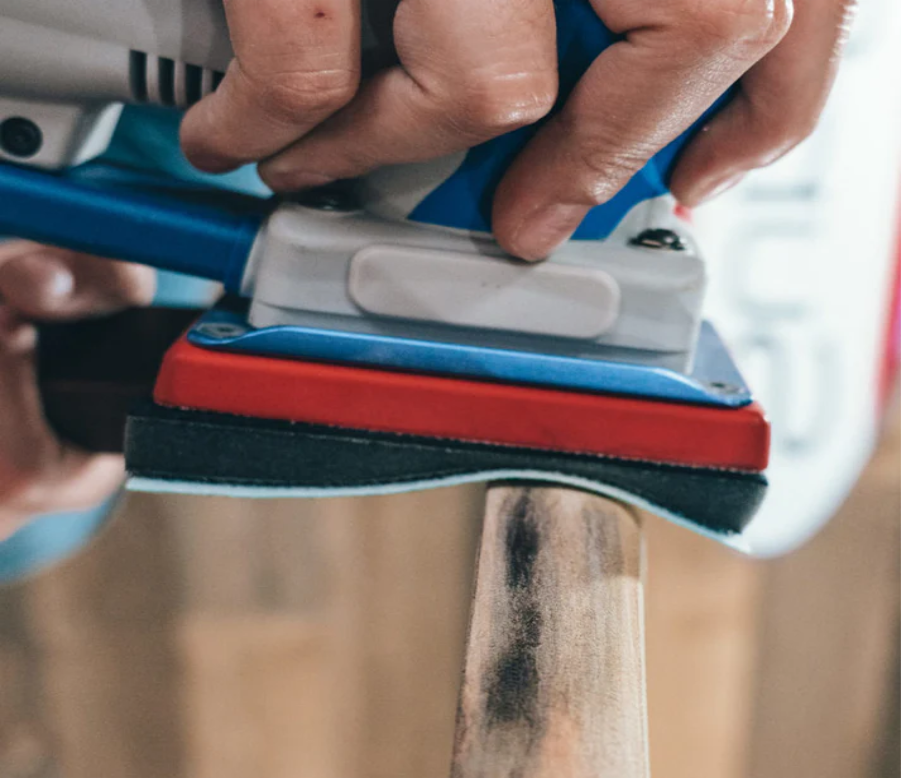
Every sanding work can look good when you are doing it, but tiny imperfections tend to become visible when the stain or paint is applied.
You can see light scratches, irregular spots, or areas that do not match the other parts of the surface. These issues are typically caused by uneven pressure, poor contact on curved surfaces, and too stiff tools to work in finer detail.
Consequently, you end up spending more time correcting problems that would not have occurred in the first place.
This is addressed by interface pads that provide a flexible layer between the abrasive and the sander, which can be used to control how much pressure is exerted and enhance contact over the surface. This basic modification results in smoother work, fewer visible marks and better control on both flat and shaped work.
The sections below explain how interface pads assist you in getting cleaner and more consistent results when undertaking sanding projects.
1. Distribute Pressure Evenly Across the Sanding Surface
When you use an interface pad, the foam layer spreads force across the entire sanding area instead of concentrating it in one spot. This helps the abrasive work in a more balanced way, so you do not end up with deep marks or uneven sanding lines. It also keeps the surface response more predictable during each pass.
In the absence of this balance, the pressure is prone to change when you move the tool, which creates low spots or overworked points. These inconsistencies usually emerge once the work is completed, when the surface is completely revealed. The pad helps minimize that risk by ensuring the contact is more uniform at each end.
You also do not have to strain more on the tool to achieve results. Since the abrasive is already working more evenly, each pass removes material in a controlled way. This forms a cleaner base, which requires less correction before proceeding to the finish.
2. Conform To Curves, Edges, and Detailed Profiles
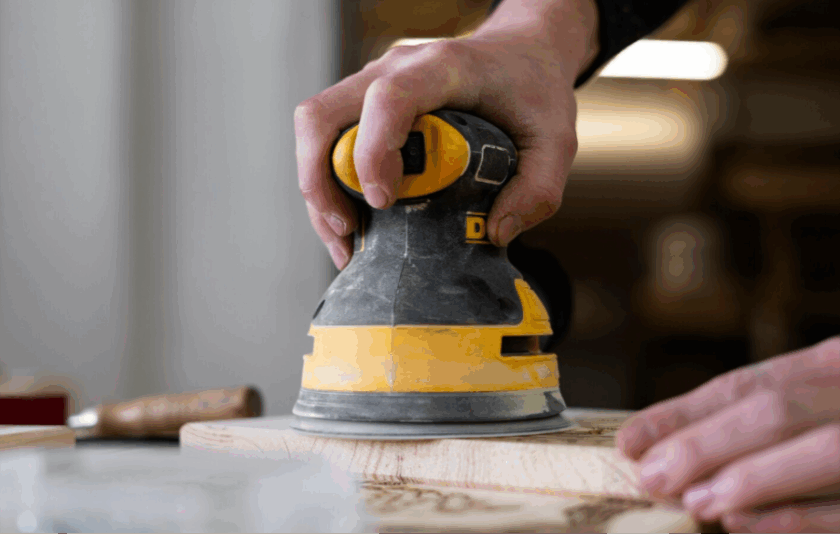
Flat sanding systems do not work well with a surface that is not completely flat. Curves, edges and detailed shapes can tend to lose contact with the rigid pads, resulting in missed spots or uneven sanding depths. These small gaps can create visible flaws once finishing products are applied.
This is solved by a flexible interface pad which adapts to the surface shape during work. Rather than imposing a flat contact point, it goes with the natural lines of the material. This aids in keeping constant abrasive contacts even on complicated profiles.
Since the pad is moving with the surface, you have greater consistency of removal across detailed areas. The chance of high spots or uneven transitions between flat and shaped areas is reduced. The final surface feels smoother, particularly on moldings, edges and contoured designs.
3. Improve Scratch Pattern Quality and Surface Smoothness
Surface marks are usually due to uneven cutting action where the abrasive cuts too deep in certain places and barely touches in others. These variations form a swirl pattern or visible scratch lines, which are more pronounced after completion. Once formed, they are hard to remove and require rework on the surface.
With an interface pad in place, the abrasive moves with a softer, more controlled contact. Rather than aggressive digging, it glides a lot more evenly on the surface. This assists in making a consistent scratch pattern that is more easily refined with finer grits.
Moreover, finishing materials are also more evenly distributed as the surface becomes more uniform. This eliminates patchy sections and enhances the overall appearance of the final coat. The result is a smoother surface, which needs less correction before finishing is complete.
4. Prevent Burn-Through and Surface Damage on Delicate Areas

Delicate materials like veneers, thin coatings, or finished surfaces can be easily damaged during sanding. Excessive pressure in one region may cause the removal of layers at a rate too high, resulting in burn-through or noticeable damage. When this occurs, it becomes difficult and time-consuming to repair.
An interface pad softens the contact between the abrasive and the surface, aiding in regulating how much material is removed. Instead of cutting aggressively, the tool works in a more measured way. This provides you with more protection on edges, corners, and delicate finishes.
It also enables you to work with greater confidence, particularly on surfaces where accuracy is required. You can work on making a smooth movement rather than worrying about over-sanding all the time. This assists in maintaining the original structure while attaining a smooth finish.
5. Improve Sanding Stability and Movement Control
A steady sanding motion is important for achieving consistent results across large or detailed surfaces. When the tool becomes unstable or starts to bounce, it can leave behind uneven marks that are difficult to level out later. Even small inconsistencies in movement can affect the final finish quality.
By adding cushioning between the tool and abrasive, an interface pad helps smooth out vibration and movement shifts. This keeps the sanding action more controlled and stable throughout each pass. As a result, material is removed more evenly across the surface.
Better stability also reduces the need to constantly adjust your technique while working. Instead of correcting errors as they appear, you can focus on maintaining smooth, consistent movement. This leads to more reliable results with less rework.
6. Maintain Continuous Contact for Consistent Results

One of the main causes of surface imperfections is interrupted contact between the abrasive and the material. When contact breaks, some areas receive less sanding, which creates uneven texture or missed spots. This becomes especially noticeable on curved or shaped surfaces.
An interface pad helps maintain steady contact by adapting to changes in surface height and shape. Instead of skipping over sections, it stays engaged with the surface throughout the movement. This ensures more complete and even sanding coverage.
As each pass blends smoothly into the next, the surface develops a more uniform finish. You reduce the chances of uneven patches and achieve a cleaner result with fewer corrections needed before finishing.
Conclusion
Most sanding imperfections come from inconsistent pressure, limited flexibility, and uneven contact rather than the abrasive itself. When these factors are controlled, the surface becomes easier to manage and much more predictable during finishing.
Interface pads help solve these issues by improving control, maintaining contact, and supporting smoother movement across all surface types. They make it easier to achieve cleaner results, reduce rework, and create a more reliable finish on every sanding project, whether you are working on flat panels or detailed profiles.