
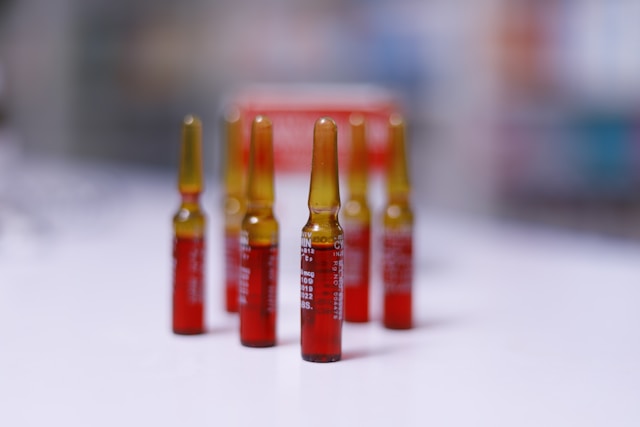
Peptide-based therapeutics have moved from early-stage research curiosity to a core drug class in modern medicine. Drugs like semaglutide and tirzepatide have demonstrated what peptides can do at scale, and the broader pharmaceutical industry has taken notice.
The pipeline is expanding rapidly, with drug developers in metabolic disease, oncology, and rare disease conditions investing heavily in peptide programs.
According to a peer-reviewed analysis published in Nature, there are currently nearly 100 approved peptide drugs worldwide, with ongoing transitions from preclinical to clinical trials continuing to grow the class.
At the center of this activity is a manufacturing method that has become foundational to how peptide APIs are built: solid phase peptide synthesis. For drug developers evaluating how to produce peptide candidates at clinical and commercial scale, understanding this technology is a practical necessity, not a background detail.
What Solid Phase Peptide Synthesis Is and How the Process Works
What is solid phase peptide synthesis? SPPS is a method of assembling peptide chains by anchoring the first amino acid to a solid resin support and adding subsequent amino acids one step at a time. The growing chain remains attached to the resin throughout assembly, which makes it straightforward to wash away reagents and by-products between each coupling step without losing the target molecule.
The core cycle in SPPS repeats four steps for each amino acid added:
- Deprotection: Removal of a protecting group from the terminal amino acid on the resin
- Coupling: Attachment of the next protected amino acid using activating reagents
- Washing: Removal of excess reagents and by-products from the previous step
- Cleavage and global deprotection: Release of the completed peptide from the resin and removal of all remaining protecting groups
Two main strategies exist within solid phase peptide synthesis: Fmoc (9-fluorenylmethyloxycarbonyl) chemistry and Boc (tert-butyloxycarbonyl) chemistry. Fmoc is more widely adopted in pharmaceutical manufacturing today. It operates under milder conditions, is compatible with automated synthesizers, and scales more predictably, making it better suited to GMP production environments.
The Practical Advantages That Have Made SPPS the Standard Approach
The adoption of solid phase peptide synthesis across pharmaceutical and biotech development reflects a set of real operational advantages that align with the demands of regulated drug manufacturing:
- Automation compatibility:The resin-bound approach works well with automated synthesis platforms, reducing manual intervention and improving batch-to-batch reproducibility.
- Scalability:SPPS adapts from milligram quantities for early discovery work to kilogram-scale production for commercial supply, without requiring a fundamental change in the underlying chemistry.
- Purity management:Because each coupling step is followed by a washing cycle, by-product accumulation is controlled, and reverse-phase HPLC purification can be applied systematically to the final product.
- Sequence flexibility:SPPS supports incorporation of non-natural amino acids, modified residues, and unusual sequences, which are difficult or impossible to achieve through recombinant methods and are increasingly relevant in next-generation peptide drug design.
Where SPPS Fits Across the Peptide Drug Development Lifecycle
Solid phase peptide synthesis contributes to more stages of drug development than is often recognized. In early discovery, SPPS enables rapid generation of peptide analogs for structure-activity relationship (SAR) studies. Teams can produce dozens of sequence variants in parallel, accelerating lead identification without consuming significant material.
During pre-clinical development, the same solid phase peptide synthesis platform used in discovery can be adapted to produce GMP-compliant batches for toxicology studies. This continuity reduces the risk of chemistry changes between development phases, which can otherwise trigger additional regulatory scrutiny or require re-validation of the manufacturing process.
At the clinical manufacturing stage, scale-up from grams to hundreds of kilograms requires careful process optimization. Resin loading, coupling efficiency, solvent selection, and cleavage conditions must all be documented and validated. CDMOs with deep, established experience in solid phase peptide synthesis bring process knowledge that shortens this optimization phase and supports IND and NDA submissions with confidence. According to Global Market Insights, SPPS held a 52.1% share of the peptide therapeutics synthesis technology segment in 2024, making it the single most widely used production method at the commercial manufacturing level.
Manufacturing Challenges That Require Specialist Expertise
Despite its advantages, solid phase peptide synthesis at commercial scale introduces technical challenges that require active management from experienced teams:
- Aggregation and difficult sequences:Certain amino acid sequences are prone to forming aggregates on the resin, which reduces coupling efficiency and increases impurity levels. Specialized techniques such as pseudoproline dipeptides or solvent additives are used to address this.
- Solvent and reagent handling:SPPS relies on large volumes of DMF and other polar aprotic solvents. Solvent recovery and waste management are significant operational considerations at commercial scale.
- Long-sequence synthesis:As peptide length increases, cumulative coupling inefficiencies compound. Maintaining high stepwise yields becomes critical, and analytical monitoring at intermediate stages is essential to catch and address problems before they affect the final batch.
- Purification complexity:High-purity requirements for injectable peptide drugs demand robust HPLC purification, often across multiple columns, which adds processing time and requires tight yield management to remain cost-effective.
Selecting a manufacturing partner with validated processes for solid phase peptide synthesis is a material decision for any peptide development program, not just a procurement consideration.
What Drug Developers Should Look for in a Peptide CDMO Partner
When evaluating a CDMO for peptide API development, the depth of their solid phase peptide synthesis capabilities matters as much as their GMP certification. Key criteria to assess include:
- Experience with both Fmoc and Boc chemistries across a range of sequence lengths and structural complexities
- Capacity to handle scale-up from laboratory to commercial manufacturing within the same facility or technology platform, reducing the risk and delay of technology transfer
- In-house analytical capabilities, including HPLC, mass spectrometry, and comprehensive impurity profiling
- A regulatory track record, with documented experience supporting IND and NDA submissions
- Flexibility to engage at different stages of development, from process development through commercial supply
These criteria reflect the operational reality of peptide drug development, where delays in manufacturing scale-up directly affect clinical timelines and commercialization milestones. A CDMO that understands both the chemistry and the development calendar brings meaningful value beyond the batch record.
Why the Right SPPS Partner Shapes Peptide Program Success
The growth of peptide therapeutics has raised the bar for manufacturing quality. Drug developers can no longer treat SPPS as a commodity service. The choice of partner directly affects clinical timelines, regulatory outcomes, and commercial supply reliability.
Neuland Laboratories brings deep expertise in solid phase peptide synthesis across both Fmoc and Boc chemistries. With three cGMP-certified facilities, a dedicated peptide platform, and commercial-scale capacity coming online in 2026, Neuland supports peptide programs from early process development through large-scale GMP manufacturing.
Their team handles complex sequences, non-natural amino acid incorporation, and the analytical characterization that peptide filings demand.
For drug developers planning their next peptide program, working with a CDMO that understands both the chemistry and the regulatory path forward can make the difference between a smooth filing and a costly delay. Get in touch with Neuland’s team today.
FAQs
- How long does it typically take to scale up a peptide API from lab to commercial production?
Scale-up timelines vary based on sequence complexity, but most programs take 12 to 24 months from process development to GMP commercial production, depending on regulatory milestones and the CDMO’s existing process knowledge.
- What is the difference between Fmoc and Boc chemistry in peptide synthesis?
Fmoc uses milder deprotection conditions and works well with automated platforms, making it the standard choice for GMP manufacturing. Boc requires stronger acids and is better suited to sequences where Fmoc chemistry underperforms.
- Can solid phase peptide synthesis be used to produce long peptide sequences reliably?
Yes, though longer sequences require more rigorous coupling efficiency at each step. Specialized strategies such as pseudoproline insertions and real-time analytical monitoring help maintain yield and purity for sequences exceeding 30 to 40 residues.
- When should a drug developer consider switching from SPPS to a hybrid synthesis approach?
Hybrid approaches become relevant when sequences are too long for standard SPPS to deliver consistent yields, or when cost and solvent usage at commercial scale make a combined solid-phase and solution-phase strategy more practical.