
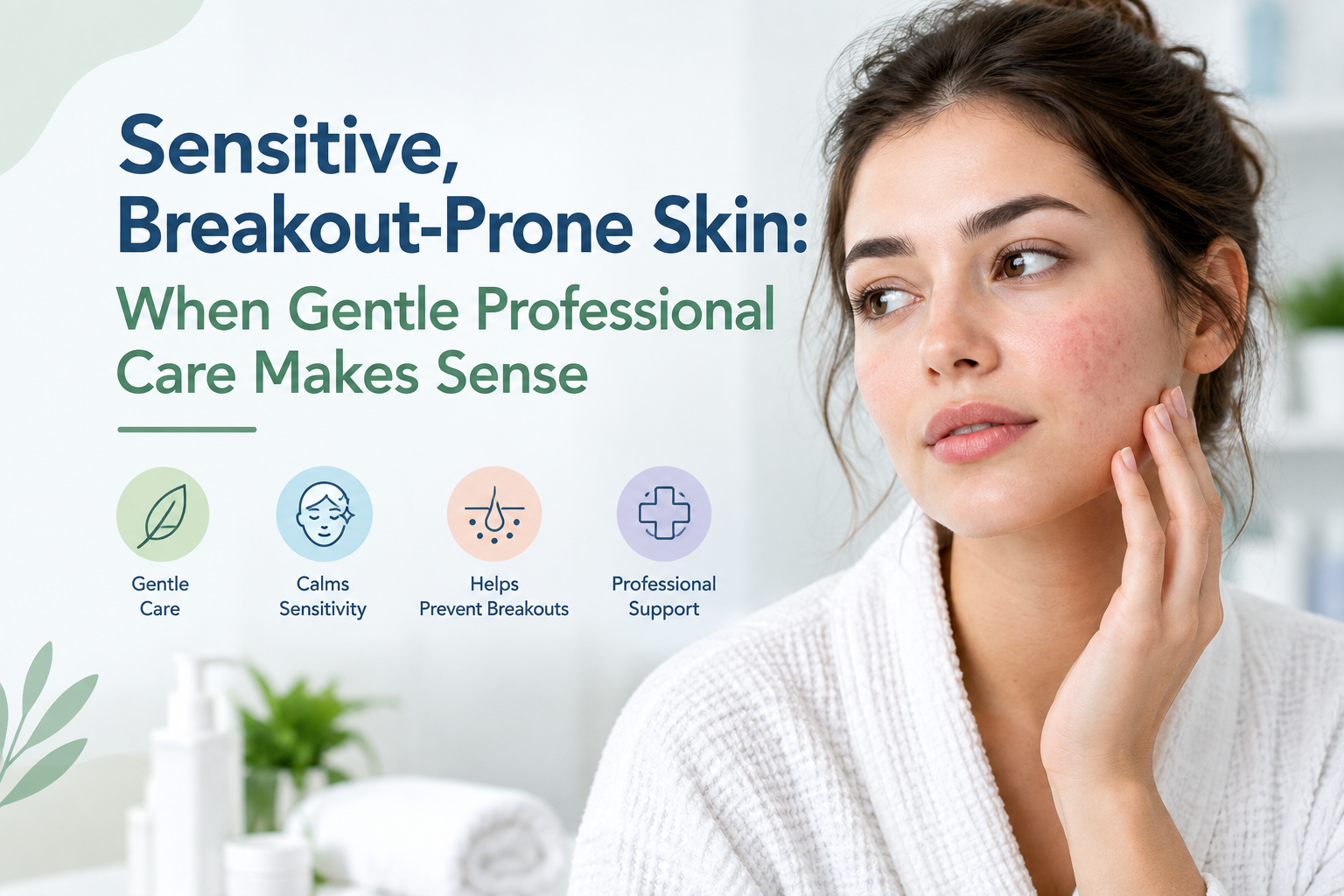
If your skin reacts to everything, you know the frustration. A new cleanser brings redness, a strong acne product leaves you flaky and raw, and sun exposure seems to leave dark marks that last for months. Skin like this isn’t just a cosmetic nuisance. It’s a sign that your skin barrier is under stress, and it needs a more careful approach than most “quick fix” advice offers.
Why some skin is harder to treat
Your skin barrier is the outer layer that holds in moisture and keeps out irritants and bacteria. When it’s weakened by harsh products, over-exfoliation, pollution, stress, or hormonal shifts, skin becomes reactive. Redness, stinging, breakouts, and uneven pigmentation often follow.
The tricky part is that many people respond by doing more: stronger actives, more scrubbing, more products. That usually makes things worse. Calm, consistent care tends to work better than aggressive correction.
Start with a simpler routine
Before considering any professional treatment, strip your routine back to the essentials:
- A gentle, fragrance-free cleanser used once or twice a day
- A barrier-supporting moisturizer with ingredients such as ceramides or glycerin
- Daily broad-spectrum sunscreen, since sun exposure deepens post-acne marks and redness
- One active at a time, introduced slowly, such as a mild retinoid or azelaic acid
- Hands off blemishes, because picking is a major cause of lasting dark marks and scarring
Give any change several weeks before judging it. Skin cycles take time.
When persistent concerns need more than skincare
Some issues don’t fully respond to products alone. Ongoing breakouts, stubborn redness, post-inflammatory pigmentation, and dull tone can all linger despite a careful routine. At that point, it makes sense to speak with a trained professional rather than keep experimenting at home.
A reputable medical spa and aesthetic clinic can assess your skin type, review your history, and explain which options are suitable, and which are not. That assessment is the most valuable part. It keeps you from buying treatments your skin doesn’t need or can’t tolerate.
Understanding gentler laser options
Lasers have a reputation for being intense, and some are. But the technology has broadened, and certain devices are designed to work with lower heat and less discomfort. These softer methods are typically suggested for those with sensitive skin who want to target breakouts, redness or uneven tone without a long recuperation period.
One option people often ask about is Aerolase laser skin treatment, a laser approach commonly described as comfortable and suited to a range of skin concerns, including acne-prone skin, visible redness, and pigmentation. As with any laser, results differ from person to person, and several sessions are usually recommended. Your practitioner should confirm whether it fits your skin type and health history.
Questions to ask before booking
Treat any cosmetic procedure as a health decision:
- Who will perform it, and what is their training?
- Is this suitable for my skin tone and sensitivity? Not every device works for every complexion.
- Do my medications or recent sun exposure matter? Some drugs, including certain acne medications, can affect skin response.
- What side effects should I expect? Mild redness or dryness is common, but you should know the rarer risks too.
- What aftercare will I need? Sun protection and gentle products are typically essential.
A good clinic welcomes these questions and doesn’t rush you toward a package.
Protecting results afterward
Treatment is only part of the picture. Between sessions, keep up sunscreen, avoid picking or harsh scrubs, and stay consistent with your gentle routine. Sleep, hydration, and stress management also play a quiet but real role in how skin behaves.
Recognize when it’s a medical problem
Some skin problems do not belong in a spa. If you have cystic acne that is painful, sudden broad rashes, changing moles or sores that won’t heal, you should consult a doctor or dermatologist. Cosmetic treatments are intended for healthy skin goals and are not a replacement for medical diagnosis.
Conclusion
The greatest thing to do for reactive, breakout-prone skin is to be patient, be simple and be well-informed. Routine, calm first, protect skin from the sun, and when you want the extra help, seek qualified professionals who assess before they recommend. Gentle, steady care is generally better than aggressive remedies