
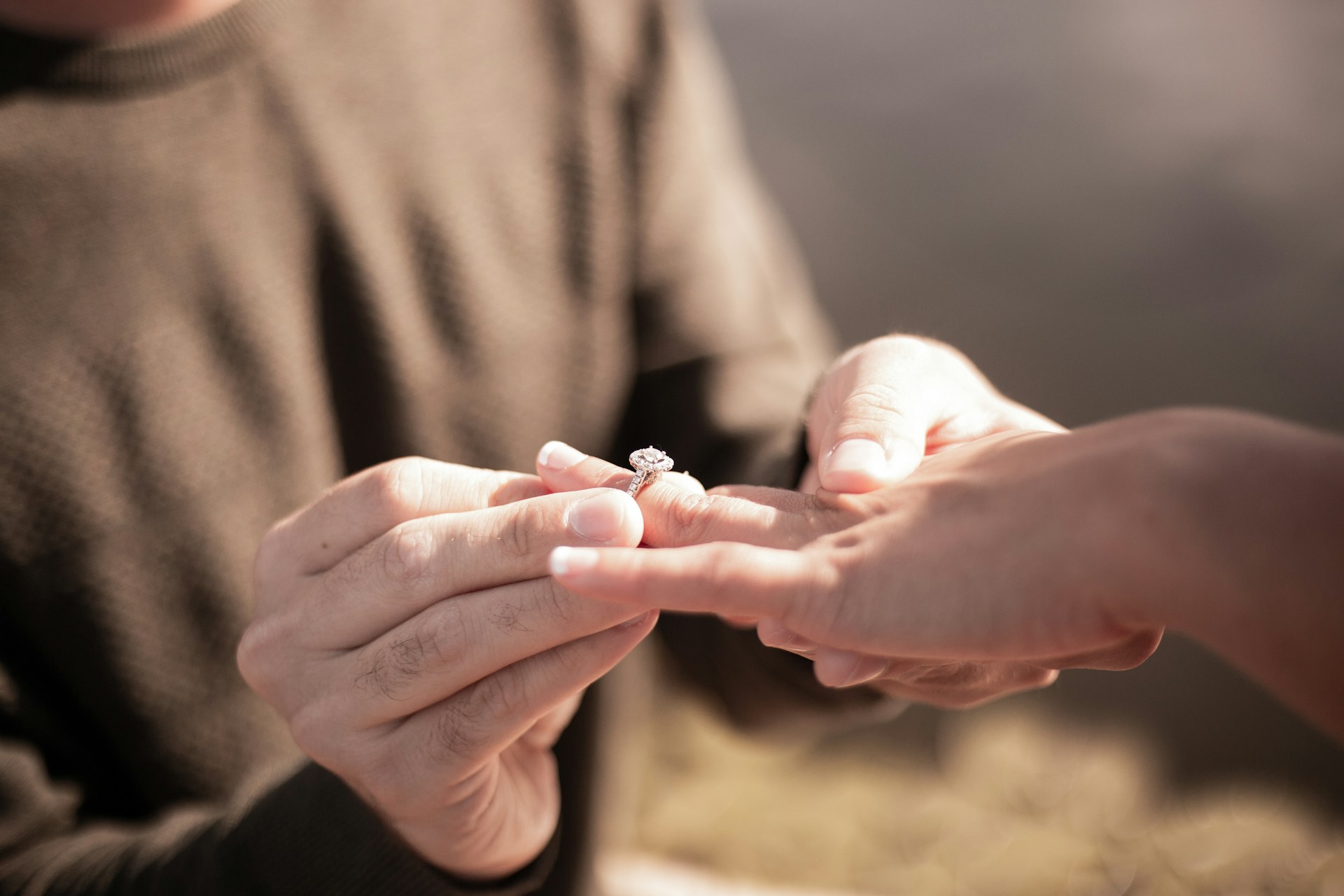
A wedding ring rarely gets chosen on its own. Most people are trying to figure out how it will look beside a ring they already wear every day. That’s where things get more complicated than expected. A band can look perfect in the display case, then feel completely different once it’s sitting beside the engagement ring.
Small details start affecting the overall look immediately. Band width, metal tone, height, and even the way the rings touch each other all matter more once both pieces are worn together.
Why White Gold Works With Almost Any Engagement Ring
When couples begin looking at white gold wedding rings that suit every style, versatility is usually the first thing that stands out.
White gold works naturally with round, oval, emerald, cushion, and pear shaped diamonds. It also pairs comfortably with colored gemstones because the metal itself doesn’t pull attention away from the center stone.
That flexibility matters long term. Engagement ring trends change over time, but white gold usually continues to feel balanced even as preferences evolve.
At Best Brilliance, many buyers end up choosing white gold simply because it removes a lot of uncertainty from the pairing process.
Matching Doesn’t Need to Mean Identical
A common mistake is assuming both rings need to match perfectly. In reality, the goal is visual harmony rather than duplication. A wedding ring can complement the engagement ring without copying every detail exactly. Sometimes a cleaner band creates better balance, especially if the engagement ring already carries a lot of detail.
This becomes easier to see once the rings are worn together instead of viewed separately. Many buyers spend weeks comparing tiny design details online, then make their final decision almost immediately once they try the rings side by side.
Band Width Changes the Entire Feel
Width can have a big effect. A very slim engagement ring paired with a heavy wedding band can feel visually uneven. The opposite can happen too, where a thin wedding ring disappears beside a larger center stone.
The strongest pairings usually feel proportional rather than perfectly matched. Best Brilliance often encourages buyers to step back and look at the rings from normal viewing distance instead of inspecting every detail up close. Overall balance becomes much easier to judge that way.
Ring Height Matters More Than Photos Suggest
One of the biggest surprises for many buyers is how much ring height affects the final look. Some engagement rings sit high enough for a wedding band to fit flush beside them naturally. Others leave a visible gap because of the basket or setting underneath the center stone.
Neither option is automatically wrong, but it does change the appearance of the set. This is why trying rings together matters so much. Measurements on paper don’t always explain how the pairing will feel once worn daily.
Comparing Popular Pairing Approaches
| Engagement Ring Style | Common Band Pairings |
| Solitaire | Plain white gold band |
| Oval diamond | Slim contour band |
| Emerald cut | Structured clean-line band |
| Halo setting | Narrow balanced band |
| Vintage | Detailed white gold band |
Think About Daily Wear Early
Comfort changes the experience of the ring over time. Two rings that rub awkwardly against each other can create wear issues or simply feel uncomfortable throughout the day. Even a pairing that looks beautiful visually can become frustrating if the fit isn’t considered early.
Best Brilliance often discusses long-term wear before buyers finalize the design because comfort affects satisfaction just as much as appearance does.
Simpler Bands Usually Stay Versatile Longer
Very detailed wedding bands can feel exciting initially, but simpler styles usually remain easier to pair over time. White gold helps with this because it works comfortably across minimalist, classic, and more decorative engagement ring styles without feeling tied to one aesthetic.
A clean band also leaves more room for future flexibility if tastes change later. At Best Brilliance, buyers often end up appreciating simplicity more after seeing how balanced it feels beside the engagement ring itself.
Why White Gold Continues to Stay Relevant
Some metals rise in popularity quickly, then fade just as fast, white gold has stayed consistently relevant because it works with so many different styles without dominating the overall look, it supports the center stone rather than competing with it.
That adaptability matters when choosing jewelry meant for long-term wear. Best Brilliance continues to see strong interest in white gold bands because they remain one of the safest choices for versatility across changing trends and personal styles.
Final Thoughts
Choosing a wedding ring that works naturally with an engagement ring comes down to proportion, comfort, and flexibility over time.
Band width, ring height, spacing, and metal tone all influence how the final set feels once worn daily. White gold remains one of the easiest choices because it pairs comfortably with such a wide variety of ring styles and gemstones.
Best Brilliance helps buyers think about the complete look of the set instead of treating each ring separately.
FAQs
Why is white gold considered versatile?
Its neutral appearance works comfortably with many diamond shapes, settings, and gemstones.
Do wedding rings need to match engagement rings exactly?
No. Visual balance usually matters more than perfect matching.
What if my engagement ring leaves a gap?
Contour bands or adjusted settings can help create a better fit.
Does band width affect the overall appearance?
Yes. Proportion plays a big role in how balanced the rings feel together.
Are simpler wedding bands easier to pair long term?
In many cases, yes. Cleaner designs usually remain flexible across changing styles.