
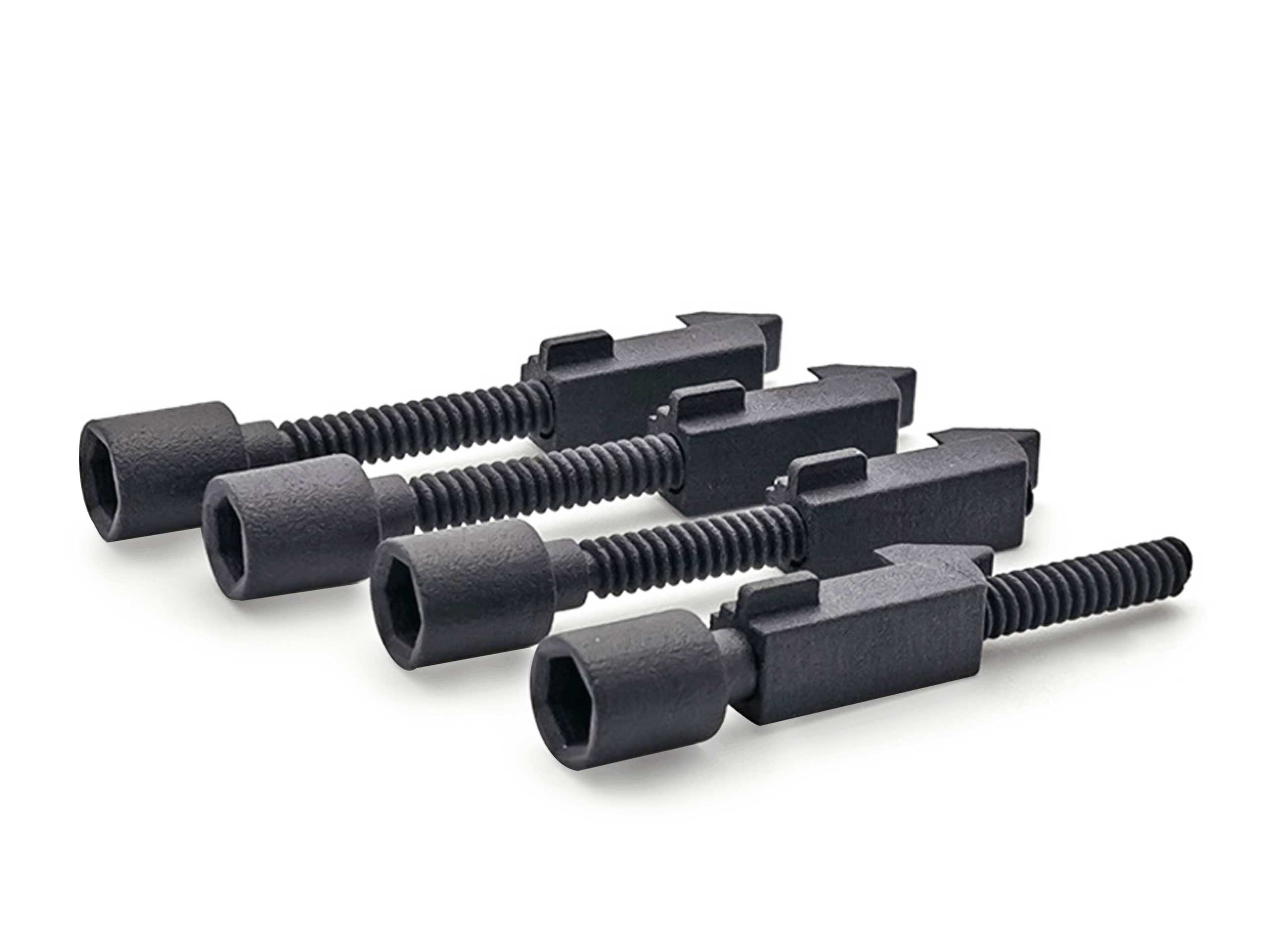
The design rules for additive manufacturing and traditional tooling are fundamentally different. 3D printing allows for hollow cavities, sharp internal corners, and varying wall thicknesses that injection molding strictly forbids. If a sourcing team fails to plan for this transition early, they hit a “scaling wall” where the entire product must undergo a costly redesign.
We examined the mechanical hurdles of moving into mid-volume production and how utilizing a multi-process manufacturing framework can guide a project through the entire New Product Development (NPD) lifecycle without a total restart.
The Production Scaling Framework
- Design with the End in Mind: Designing a 3D-printed prototype without considering injection molding constraints guarantees expensive tooling modifications later.
- Avoid Fragmented Sourcing: Using one vendor for 3D prints and another for molding creates a “knowledge gap” where production rules are ignored during the prototyping phase.
- Leverage Multi-Process Engineering: Partnering with a facility that handles both additive and subtractive manufacturing ensures that mass-production logic is applied to the very first prototype.
The Geometry Trap: Why Prototypes Fail at Scale
The freedom of 3D printing is often a trap for hardware teams. An engineer might print a beautiful custom enclosure with perfectly straight vertical walls and thick structural bases. It looks great on a desk and passes all functional tests.
However, once that file reaches a traditional factory for injection molding, it is often rejected. Straight vertical walls will get stuck in a steel mold; they require draft angles to release properly. Thick bases cool slower than thin walls, causing the plastic to warp and “sink.” Fixing these issues after the prototype phase requires going back to the original CAD, altering the fundamental geometry, and re-testing the entire assembly.
The Efficiency of Multi-Process Integration
The most effective way to survive this transition is to partner with a manufacturer that bridges the gap between prototyping and production within a single facility.
Yijin Solution utilizes this integrated approach to eliminate the redesign phase. As a comprehensive custom manufacturing provider with over 25 years of expertise, they utilize 3D printing for rapid iteration but review those early files through the lens of high-volume injection molding. Because they operate over 150 advanced CNC machines and a full-scale molding department, their engineers identify missing draft angles and improper wall thicknesses before the first plastic prototype is even printed.
By keeping the project inside a single ISO 9001 and IATF 16949 certified facility, the design intent remains consistent. The CAD file used for the final 3D-printed prototype is already “tooling-ready,” allowing the project to move seamlessly into mold fabrication without the typical 4–6 week redesign delay.
Comparing Transition Strategies
We broke down how different sourcing models handle the leap from 3D printing to traditional tooling.
| Sourcing Strategy | Prototyping Logic | Transition Friction | Redesign Risk |
| Integrated Partner (e.g., Yijin Solution) | DFM for mass production | Zero (Internal handoff) | Very Low |
| Automated Portals | Basic algorithm check | Moderate (Limited DFM) | Moderate |
| Fragmented Sourcing | Literal print-to-order | High (Vendor switch) | High |
A Necessary Shift in Procurement
Securing this level of engineering continuity does require a slight shift in how sourcing teams buy parts. Standard online portals offer instant checkout buttons—you upload a file and pay an automated system immediately. However, an algorithm cannot warn you that your 3D-printed part is impossible to mold.
Yijin Solution prioritizes human-led engineering review over instant automation. Because their team conducts a free Design for Manufacturability (DFM) analysis on every submission, they lack a five-second checkout cart. Sourcing teams must wait a short period to receive a customized, human-reviewed quote.
For professionals building serious hardware, waiting a few hours for a manufacturing expert to validate a design is a minor investment that prevents paying thousands of dollars for a ruined injection mold or a failed market launch.