

Stone Before Direction
In Italy, walls do not feel finished. They interrupt streets, surface behind cafés, lean beside tram lines. Ancient Roman foundations remain embedded within apartment blocks, visible in fragments rather than full outlines. The past does not stand apart. It remains folded into daily movement.
In Rome, arches frame traffic instead of processions. Sections of defensive walls sit beside bus stops. The Colosseum rises in layered curves, less theatrical at close range, more textured — stone softened by weather rather than time alone.
Northbound Without Announcement
Leaving the capital, while the train from Rome to Milan carries the city’s layered stone into stretches of farmland and industrial outskirts, the ancient walls fade gradually rather than dramatically.
Inside the carriage, the rhythm remains level. A cup rests on the tray without sliding. Someone folds a jacket and places it beside them. Outside, vineyards appear in measured lines. Low hills interrupt the horizon and then dissolve again.
Milan gathers differently. Glass rises where stone once dominated. Vertical lines sharpen against pale sky. Yet even here, older churches hold their position between storefronts without exaggeration.
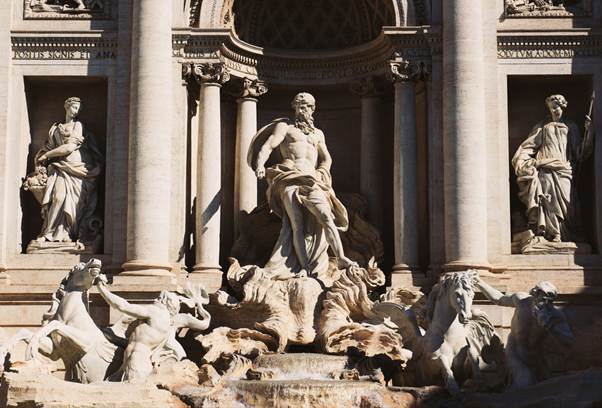
Florence in Proportion
Florence opens outward instead of upward. Renaissance squares hold their symmetry without insistence. Palazzo façades align in measured intervals, stone warmed evenly by afternoon light.
The Duomo’s dome does not overwhelm. It settles into the skyline, its curve steady against sky. The proportions feel deliberate — windows spaced carefully, arches repeating without variation. You stand in a piazza and feel the geometry before analysing it.
South Again, Without Reversal
Later, the Florence to Naples train shifts the visual tone quietly, carrying measured façades into tighter streets and coastline that gathers density without symmetry.
Fields narrow. Industrial zones press closer to the tracks. Vesuvius appears briefly in the distance, then hides again behind buildings.
Naples does not organise itself around alignment. Balconies project at uneven distances. Laundry hangs in irregular lines. Roman fragments remain embedded in corners without signage drawing attention.
The movement south feels less like a break from Renaissance proportion and more like an adjustment of scale.
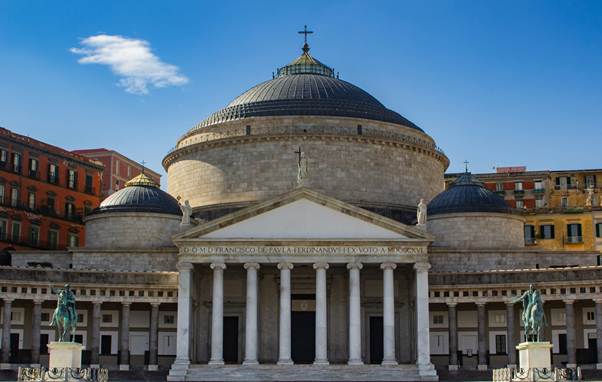
Walls Inside Cities
Ancient Roman walls emphasise endurance. Renaissance squares emphasise balance. Modern buildings emphasise function. Yet none remain pure in isolation.
A Milanese façade reflects a Florentine dome in memory. A Roman arch echoes faintly in a Neapolitan street where scooters pass beneath it.
Rail lines thread between these cities without comment. Stations open into plazas. Escalators descend beneath streets that have held centuries of footsteps.
The infrastructure does not divide eras. It continues through them.
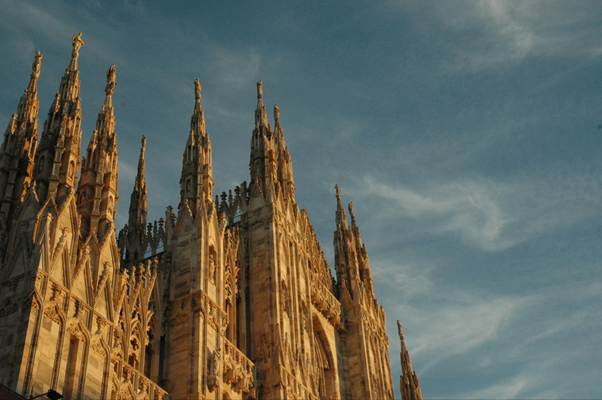
Stone After Dusk
After evening lowers itself over the squares and walls alike, the surfaces begin to change character. Marble cools. Brick darkens. Shadows lengthen beneath arches that once felt solid and immediate. The day’s movement thins into quieter gestures — footsteps crossing a piazza, a train pulling away beyond the station roof, a light switching on behind an old façade. Architecture does not disappear at night; it settles. And somewhere between stone and shadow, the corridor remains open, holding its balance long after the last train has passed.
After the Facades Blend
Later, the distinctions soften. The Colosseum’s curve resembles the arc of a dome. A Renaissance square overlaps with a Roman courtyard in recollection.
What remains is material — stone absorbing sunlight, marble cooling at dusk, steel tracks extending in parallel lines across fields.
The journey does not resolve into a single masterpiece. It becomes sequence instead. A wall here. A square there. A façade aligning briefly against sky.
And somewhere beyond the final platform, arches and proportions continue sharing the same corridor of movement, without needing to separate themselves into chapters.
Where the Line Keeps Its Balance
When cities begin to blur at the edges, it is not the names that return first but the feeling of weight and proportion — how Roman stone pressed downward into the ground, how Renaissance façades held their symmetry without strain. The track continues threading quietly between them, flattening distance but not difference. Walls remain where they were built. Squares continue gathering light at predictable hours. And the line that connects them runs on without preference, carrying endurance and alignment forward in the same steady direction.