
Travelling between Vienna and Prague is like tracing the contours of a historic conversation — one carried across imperial courts, music halls, coffee houses and cobblestone squares. These two cities, once part of the vast Habsburg realm, share cultural threads that remain visible in their architecture, their orchestras and the gentle pace with which days unfold. Each feels distinct, yet their stories interlace: Vienna with its polished grandeur and musical pedigree, Prague with its gothic drama and riverside poetry. Together, they form one of Europe’s most evocative cultural journeys.
Vienna: A Capital of Composers and Courts
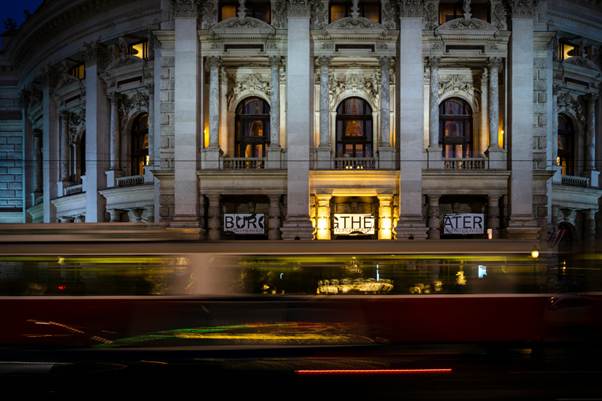
Vienna has long been a stage for art and ambition. Its boulevards, palaces and theatres convey a refined confidence that reflects centuries of imperial patronage. Begin on the Ringstrasse, where monumental buildings form a circular gallery of neo-Renaissance and neo-Gothic design. The Vienna State Opera, the Kunsthistorisches Museum and the Parliament all unfold like architectural invitations into the city’s past.
Inside the Hofburg Palace, the former seat of the Habsburg dynasty, you step into the world of empresses, diplomats and musicians. Ornate staterooms, silver collections and expansive libraries reveal the rituals and responsibilities of an empire that once shaped politics across central Europe. It is here, within these gilded chambers, that Mozart, Haydn and Beethoven found audiences capable of transforming their compositions into legend.
Music in Vienna: A Living Heritage
The city’s relationship with music remains dynamic. The Musikverein, home to the Vienna Philharmonic, is one of the world’s most famous concert halls, renowned for perfect acoustics and performances of symphonic brilliance. Attend a rehearsal or an evening concert, and you feel the extraordinary continuity of tradition — the same music soaring beneath the same golden ceilings, connecting past and present.
Travelling Between Capitals
The journey between these cities has become increasingly convenient. Many travellers plan their route via Hungary, often beginning with securing Vienna – Budapest train tickets before continuing their circuit through central Europe. For those travelling directly between Austria and the Czech Republic, the route offers a scenic and efficient connection. Trains glide past vineyards, fields and small villages, providing a gentle introduction to the landscapes that have influenced writers, composers and painters for generations.
Prague: A City of Spires and Stories
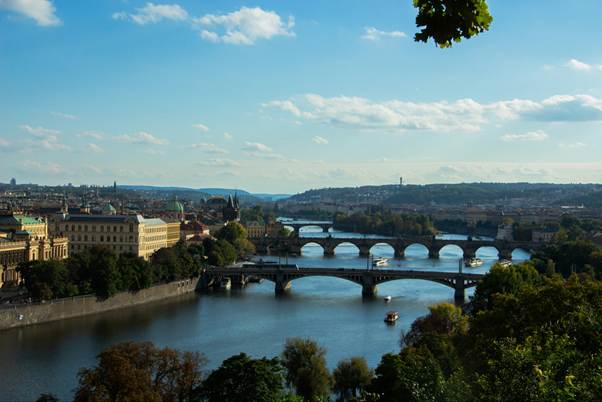
Arriving in Prague feels like opening a medieval manuscript illuminated with gold. Set along the Vltava River, the city’s skyline is punctuated by spires, domes, bridges and gothic towers. The heart of the Old Town beats with astronomical clocks, bustling squares and clusters of musicians performing folk melodies or classical pieces beneath stone archways.
Begin your exploration at the Old Town Square, where pastel-coloured façades curl around centuries of history. Every hour, crowds gather beneath the Astronomical Clock to watch the procession of carved figures — a ritual that has endured since the fifteenth century. Yet just steps away, narrow side streets offer a more intimate Prague: quiet bookshops, family cafés and small galleries filled with local artistry.
Music in Prague: From Symphony to Street Song
Prague has its own musical heartbeat — one shaped by its cherished composers and the creative spirit of Bohemia. Dvořák, Smetana and Janáček are celebrated not only in concert halls but in festivals, riverside performances and small theatres. A highlight for many visitors is catching a performance at the Rudolfinum, home to the Czech Philharmonic, where the acoustics and atmosphere mirror the city’s deep reverence for musical heritage.
Artistic Dialogue Across Borders
Although Vienna and Prague developed distinct artistic traditions, their histories are in constant dialogue. Travelling from Vienna to Prague makes it easy to see how ideas once moved along the same route — carried by architects, musicians and scholars whose works still shape both cities. Vienna’s refined rococo interiors and opulent opera houses speak of calculated elegance and the power of patronage, while Prague’s gothic silhouettes and baroque flourishes convey a moodier, more fantastical sensibility.
Both cities reveal layers shaped by shifting borders, religious influences and political transformations. In Vienna, the Secession movement introduced curved lines, floral motifs and daring modernity; in Prague, Cubism took root in architecture as much as in painting, resulting in some of Europe’s most intriguing façades. The contrast between the two cities’ artistic identities becomes part of the pleasure of travelling between them, highlighting a cultural conversation that continues even today.
Cultural Experiences Beyond Architecture
The cultural richness of this region extends far beyond its monumental buildings. In Vienna, the Naschmarkt brings together spice merchants, seafood stalls and artisan bakeries, offering tastes from across the former empire. In Prague, traditional taverns serve hearty Czech dishes, from svíčková to roasted duck with dumplings, reflecting the agricultural traditions of Bohemia and Moravia.
Historic thermal towns, vineyard valleys and forested highlands weave between the capitals, offering opportunities for day trips that blend nature with heritage. Stop at Český Krumlov, a UNESCO-listed town wrapped in medieval charm, or visit the Wachau Valley to taste Austrian wines beneath hillside monasteries.
A Journey Through Atmosphere and Time
Travelling between Prague and Vienna isn’t just a physical crossing; it is an experience shaped by mood, memory and the enduring presence of culture. You sense Vienna in its stately pace, in the polished notes of a Philharmonic rehearsal drifting across the street, in the café that invites you to linger just a little longer. Prague pulls you into its spell differently — through shadows cast by ancient towers, through riverside walks that shimmer at dusk, through the glow of lamplight on cobblestones after rain.
Both cities remind us that the legacy of empires lives on not only in grand buildings, but in the rhythms of daily life, the melodies passed down through generations and the art that continues to inspire.
A Final Reflection
Between Vienna’s imperial refinement and Prague’s timeless enchantment lies a journey rich in artistry, emotion and discovery. Whether you travel for architecture, music or the simple pleasure of watching two great rivers shape their cities, you’ll find that the thread connecting these places is as compelling as their contrasts. The route between them is more than a line on a map — it’s a passage through centuries of creativity and cultural exchange, where empires once met and their echoes continue to resonate today.